

Insights
Afghan Women’s Opinions on their Critical Needs and Humanitarian Aid
Download the PDF Peace Brief of this Insight
Share this page
Summary
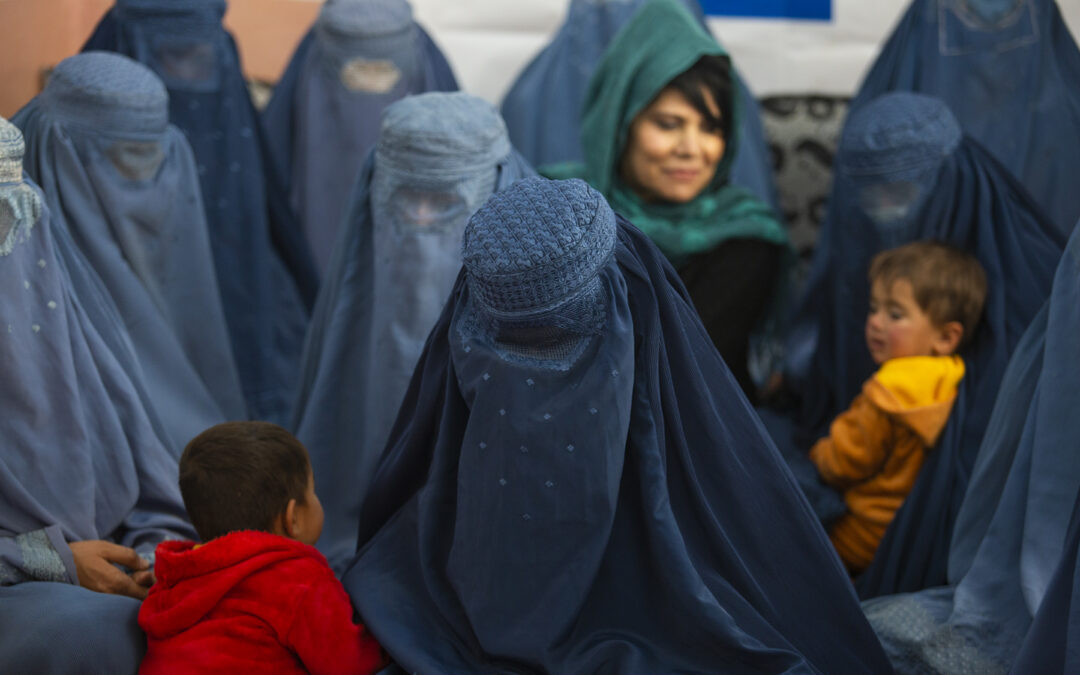
535 women from the provinces of Herat, Balkh, Kandahar, Daikundi, Jawzjan, Farah, Faryab, and Baghlan were polled about the state of their livelihoods and what they need from humanitarian aid.
- 58% of survey respondents replied that their household’s economic situation changed for the worse over the last eight months, with another 29% saying their situation “somewhat worsened”. Only around 3% of respondents claimed any kind of improvement.
- Respondents identified unemployment (32%) or restrictions on women’s rights (27%) as the two issues women in their communities were most concerned about. This was roughly true across provinces, with some emphasizing closure of schools and the security situation to greater (as is the case in Balkh) or lesser degrees (as is the case in Faryab, where unemployment and restrictions on rights were more dominant concerns).
- 55% replied that “some women” benefited from international humanitarian aid in their communities. But 31% replied “no women.” Only 1% replied “all women.”
- An overwhelming number of respondents (72%) replied that food was the most important humanitarian need in their communities.
Over the last twenty years, Afghanistan has been the recipient of the some of highest amounts of development aid in the world, yet in July 2021 over 70% of the population was living below the poverty level and the country was in the midst of a humanitarian crisis. Decades of conflict, forced displacement, and natural disasters had left the majority of the population struggling to meet their basic needs. The combination of political turmoil, the withdrawal of international aid and economic sanctions that have taken place since the August 2021 threaten to push the country towards greater levels of poverty. Estimates by international agencies, in September 2021 suggested that unless action was taken, up to 97% of the Afghan population would be living in poverty within months of the Taliban takeover.10 The BISHNAW survey in May 2022 focused on humanitarian access and the economic situation in Afghanistan. The participants highlighted the declining economic status of their families and the quagmire of humanitarian and development challenges.
Data Explorer
Welcome to our Survey Data Explorer. Using Microsoft Power BI you can see the results of this month’s survey, and use the interactive controls to explore the data in more detail.
Page Controls: Navigate through different pages of the dashboard by clicking on the page numbers or using the arrows to move forward or backward.
Full Screen: Click the arrows icon button located at the bottom right corner of the visualization.
Filters: Use the drop-down menus to filter the data based on specific criteria such as province, age group, or profession.
News Feed
Read More Insights
Transitional Government in Afghanistan
2,500 women in 16 provinces were polled on a Transitional Government in Afghanistan.
Women’s Opinions on a Comprehensive Ceasefire in Afghanistan
2,212 women in 16 provinces were polled on a comprehensive ceasefire in Afghanistan.
Disputes Over Guiding Principles in Intra-Afghan Talks
2,101 women in 7 provinces were polled on disputes over guiding principles in Intra-Afghan talks.
Follow Us
Join Our Newsletter
Stay informed about our latest news and events
Contact Us
Email: info@dropsafghanistan.org
Website: dropsafghanistan.org