

Surveys
Afghan Women’s Opinion of the Unconditional Withdrawal of US and NATO Forces by 11 May 2021
Download the PDF Report of this Survey
Share this page
Summary
2,845 women in the provinces of Herat, Nangarhar, Balkh, Helmand, Takhar, Bamiyan, Kandahar, Daikundi, Panjshir, Jawzjan, Farah, Faryab, Badghis, Baghlan, Kunar, and Paktia were polled on the unconditional withdrawal of the US and NATO forces for May 2021’s edition of the Women’s Peace Brief.
- 65% of respondents said that the unconditional withdrawal of the US and NATO forces by 11 September 2021 is not a responsible approach.
- 56% of respondents said an increase in Taliban attacks was the most plausible scenario following the withdrawal. A rise in civilian casualties (16%) was the second-most chosen scenario. 48% of respondents said “improved security” was the least likely scenario post-withdrawal with 24% choosing “no significant change.”
- 53% of respondents said that the US and NATO should prioritize supporting a ceasefire after their withdrawal. 16% said they should prioritize preserving the existing constitution.
- 76% of respondents said that the Taliban’s conditions to rejoin talks are unreasonable. 16% of respondents thought they are reasonable.
- Focus Group Discussions (FGDs) were organized in 10 provinces. Participants largely aligned with the responses of the women polled in the survey. The majority showed a strong desire for continued NATO support for peace and the Afghan constitution. A minority displayed cynicism regarding NATO’s role and intentions.
Background
On April 14th, US President Joe Biden announced that US and NATO forces will withdraw from Afghanistan by September 11th, adding that this withdrawal will be complete and unconditional. The Taliban, while tacitly welcoming the announcement, added that the delay in the initial May 1st withdrawal date was a clear violation of the 2020 US-Taliban Agreement and stressed that they remain committed to finding a peaceful solution but only after withdrawal is completed in September. In the absence of significant progress towards a peace deal, a complete unconditional withdrawal has generated deep concerns among the public and civil society actors who worry that this step would remove international pressure on the Taliban to negotiate and compromise.
Data Explorer
Welcome to our Survey Data Explorer. Using Microsoft Power BI you can see the results of this month’s survey, and use the interactive controls to explore the data in more detail.
Page Controls: Navigate through different pages of the dashboard by clicking on the page numbers or using the arrows to move forward or backward.
Full Screen: Click the arrows icon button located at the bottom right corner of the visualization.
Filters: Use the drop-down menus to filter the data based on specific criteria such as province, age group, or profession.
Focus Group Discussions
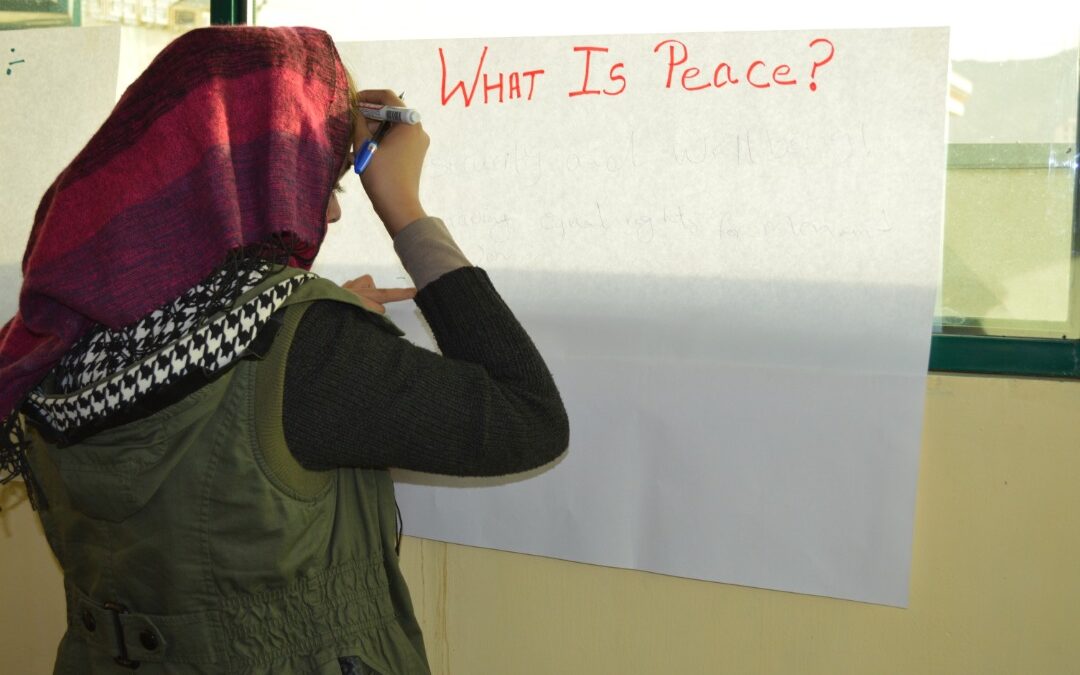
Focus Group Discussions (FGDs) were held in ten provinces (Herat, Bamiyan, Kandahar, Balkh, Helmand, Takhar, Nangarhar, Daikundi and Jazwan):
Participants were asked their thoughts about the survey results and how they themselves would respond. For the FGD participants, responses to Q1 by the women polled in the survey made sense. The unconditional withdrawal of the US and NATO forces in their view is irresponsible because of its negative consequences for the Afghan people, particularly women: increased violence, rise in civilian casualties, loss of more territory to the Taliban, and women’s accomplishments in jeopardy. The reasoning of the FGD participants also aligns with the results of survey Q2 though the FGD participants put those negative scenarios on equal footing in terms of likelihood while the Q2 respondents needed to give a ranking to the likelihood of those scenarios.
In the view of the participants, the need for US and NATO forces is greater than ever in light of the escalating war and glacial negotiations. Like the respondents to survey Q3, FGD participants believed that NATO members’ main role post-withdrawal should be to apply pressure in favor of a ceasefire and preservation of the current constitution (although here in equal measure while survey respondents emphasized the ceasefire). It was further emphasized that pressure could be applied not just on the Taliban but on their regional supporters as well. However, there were participants who felt that the withdrawal proves that the US and NATO were not honest in their promises of defeating terrorism, supporting women’s rights, and promoting democracy. Participants also thought their withdrawal lifts the pressure on the Taliban to engage in peace talks. A minority of the participants were skeptical about the promises of the US and NATO allies in fighting terrorism and emphasized that it was just a game and that the US and NATO forces were seeking their own self interests.
Finally, alluding to the recent experience of the release of 5,000 Taliban prisoners, the FGD participants unanimously agreed on the Q4 option that the Taliban’s conditions are unreasonable because in their view the group is untrustworthy. Survey respondents already displayed deep disapproval of Taliban conditions (76.45% said they were not reasonable) but the FGD participants show this to an even greater degree. In the view of participants, it is likely that the released prisoners will rejoin the battlefield, causing a rise in the level of violence and rate of civilian casualties. They also insisted that accepting these conditions can potentially compromise women’s rights. The participants also noted that such preconditions are only being proposed by the Taliban while the Afghan government committed to engage in talks without any preconditions.
There were some regional variations in FGD participant responses. Unlike other participants, women in Panjshir were exceptionally confident and unanimously expressed that the situation will not change much in this province, but agreed that in other provinces, especially in the south, more territories will fall to the Taliban. In the tele-survey, responses from Panjshir province were more in line with other provinces: an increase in Taliban attacks and a rise in civilian casualties were the most possible scenarios (38.02% and 23.97% respectively). The majority of women in Helmand, meanwhile, displayed greater distrust towards the value of the US and NATO’s promises and motives. There is even a sense that NATO members were dishonest about their desire to protect women’s rights and democratic institutions.
News Feed
Read More Surveys

Impact of the New Criminal Code on Women and Girls in Afghanistan
A survey involved 7,649 women from 33 provinces was conducted to assess the impact of the new Criminal Code on women and girls under Taliban rule. This survey explored women’s awareness of the new decree, their experiences and perceptions of the justice system, and the implications of the new legal provisions on their rights, safety, and access to justice. The survey reveals the challenges women face in seeking legal protection and accountability and offers valuable insights into the social, legal, and personal consequences of the new Criminal Code on the lives of Afghan women and girls.

Access to Health for Women and Girls in Afghanistan
A survey of 8,085 women across 34 provinces on how women and girls access healthcare under Taliban rule. Respondents identified where they seek medical help, which female health providers their communities lack, and the main obstacles they face in receiving treatment. The findings highlight the severe constraints shaping women’s health choices and their limited access to essential care.

Afghan Women’s Perspectives on Governance under Taliban Rule
A survey involved 7,988 women from 33 provinces was conducted to assess Afghan women’s perspectives on governance under Taliban rule. This survey explore women’s experiences and perspectives on how Taliban governance affects their lives. The survey reveals the challenges women face and offers valuable insights into women’s social and personal struggles during this period.
Follow Us
Join Our Newsletter
Stay informed about our latest news and events
Contact Us
Email: info@dropsafghanistan.org
Website: dropsafghanistan.org