
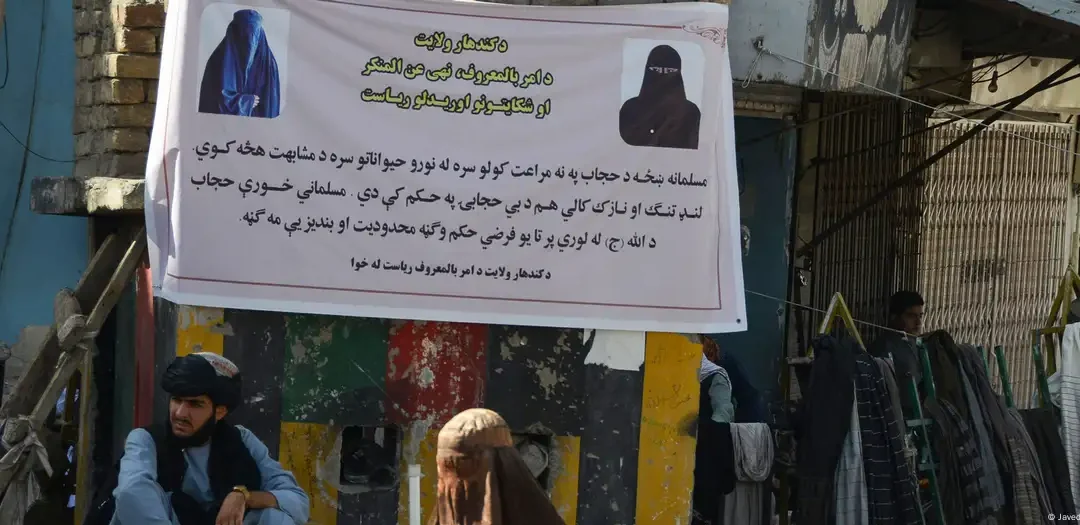

Insights
The PVPV Law and its Impact on Women and their Communities
Share this page
Summary
-
A total of 7,223 women from 32 provinces of Afghanistan were surveyed to assess how the implementation of the Promotion of Virtue and Prevention of Vice (PVPV) law is impacting women, girls, and their communities.
-
The majority of respondents reported negative behavioural changes in their communities since the introduction of the PVPV law, with (55.59%) noticing negative impacts compared to only (27.83%) who observed any positive change.
-
The most commonly affected area of life due to the law’s enforcement was women’s ability to seek employment (32.47%), followed by access to non-formal education (24.49%), access to public spaces (18.44%), and access to healthcare (8%).
-
When asked how they have changed their daily routines to avoid interaction with PVPV inspectors, (48.89%) said they now wear the full hijab including the niqab, and (19.83%) stated they no longer leave home without a mahram. Meanwhile, (21.46%) reported no change to their routine, indicating a minority remain unaffected or continue as usual.
Data Explorer
Welcome to our Survey Data Explorer. Using Microsoft Power BI you can see the results of this month’s survey, and use the interactive controls to explore the data in more detail.
Page Controls: Navigate through different pages of the dashboard by clicking on the page numbers or using the arrows to move forward or backward.
Full Screen: Click the arrows icon button located at the bottom right corner of the visualization.
Filters: Use the drop-down menus to filter the data based on specific criteria such as province, age group, or profession.
Focus Group Discussion
- Changes in daily routine and avoidance of PVPV inspectors
Since the implementation of the PVPV law, women across Afghanistan have experienced severe disruptions to their daily lives. Across all provinces—urban and rural alike participants described intensified restrictions on mobility, employment, education, and access to public spaces. One participant explained, “In Baghlan, women were already observing hijab, but now even colourful clothing is forbidden. They make you leave taxis for minor dress code issues” (Baghlan, FGD). Women are now required to wear a full hijab or burqa, often with gloves and masks, and must be accompanied by a male guardian (mahram) when outside the home. Even when complying with these rules, women are frequently harassed or stopped by PVPV inspectors (Muhtasibs). As a result, many limit their outings to essential needs or avoid going out altogether.
Tasks such as attending non-formal educational institutions, seeking medical care, shopping, or collecting official documents are now difficult or impossible. While formal education for girls beyond grade six has been banned since September 2021, participants reported increasing difficulties accessing non-formal learning spaces such as underground schools, online programs, and private tutoring. Many women— especially those without male guardians—have lost their jobs. One participant from Kunar shared, “Now, even for urgent medical needs, we can’t go outside without a mahram. It’s like we’re prisoners in our own homes” (Kunar, FGD).
These restrictions have deeply affected women’s and girls’ mental health; participants described their lives as isolating, anxiety-inducing, and akin to living under constant surveillance. In provinces like Bamyan and Badghis, strict face-covering rules are enforced—even for professionals like doctors and teachers. Overall, the law has curtailed not just women’s freedom of movement, but also their ability to live with dignity and autonomy.
- Enforcement methods and their effects
The enforcement of the PVPV law is widely described as coercive, unpredictable, and violent. Women who are deemed to have violated the law face verbal harassment, public humiliation, physical abuse, imprisonment, and financial penalties such as job loss or unpaid salaries. Even minor infractions—such as adjusting a face mask or wearing a colourful scarf—can result in harsh punishment. One participant recalled, “They imprisoned a 13-year-old girl for not wearing the correct hijab” (Paktia, FGD). The inconsistency of enforcement further heightens fear, prompting many women to self-censor or restrict their behaviour pre-emptively.
Participants reported that enforcement often begins with verbal “advice” or warnings but quickly escalates to physical punishment, detention, and, in some cases, forced disappearances. As one participant described, “They first warn, then threaten, then beat you. One woman I know disappeared after being taken. Others never return the same” (Bamyan, FGD). Male relatives are frequently held responsible for women’s perceived misbehaviour. Several women reported that their husbands or brothers had been detained or threatened. A participant from Badghis stated, “Even our male relatives are threatened or jailed if we’re seen without hijab. We are constantly under surveillance.” Some also recounted cases of suicide and severe trauma stemming from the psychological pressure. In a few cases, women enforcers working with PVPV inspectors were reported to be complicit in punishing other women, further eroding trust within communities, including among women themselves.
- Role of mosques and men’s compliance
Mosques play a central role in the Taliban’s enforcement strategy. Through weekly sermons and community gatherings, men are instructed to monitor and control women in their households. These messages typically emphasize hijab enforcement, restrictions on women’s movement, and the necessity of male guardianship. Imams act as intermediaries, delivering prewritten sermons that reinforce the Taliban’s policies under the guise of religious obligation.
Men are explicitly warned that they will face consequences—ranging from social shame to imprisonment—if the women in their families disobey. This approach has turned male relatives into primary agents of enforcement, regardless of their personal beliefs. As one participant explained, “Our men follow these rules not because they believe in them, but because they’re scared of being shamed or imprisoned” (Balkh, FGD). In some areas, mosque Imams go further by collecting attendance records and monitoring whether women in the family work or leave the home unaccompanied. For many men, compliance is driven more by fear and the burden of preserving family honour than by religious conviction.
- Compliance, fear, and lack of institutional support
Women’s compliance with the PVPV law is overwhelmingly driven by fear of violence, dishonouring their families, or losing their livelihoods. While many participants expressed a belief in modesty as part of their faith, they clearly distinguished this from the coercive and punitive nature of current enforcement. “Some of us still want to work, to help our families. So, we follow the rules, not from belief, but because we have no choice” (Balkh, FGD).
Beyond social pressure, women also expressed near-total distrust in the Taliban’s legal mechanisms. Complaint systems are widely viewed as inaccessible, ineffective, and dangerous. Women who attempt to report abuses are often blamed or further punished, reinforcing a sense of powerlessness. Several participants recounted how even women found innocent after detention continued to suffer long-term social stigma. As a result, most women avoid filing complaints altogether, viewing the current system as neither protective nor just.
News Feed
Read More Surveys

Gender Apartheid in Afghanistan
3,640 women in 24 provinces were polled on describing the restrictions imposed by the Taliban on women and girls and what they believe are the intentions behind these restrictions.

Afghan Women’s Opinions Regarding Marriageable Age and Underage Marriages
3,848 women in 24 provinces were polled on what constituted marriageable age and what their perception of community ideas around marriage are.
Taliban Ban on Women Aid Workers and its Impact on Women at the Community Level
2,108 women in 17 provinces were polled on the impact of the ban on women aid workers and how the international community should respond to it.
Follow Us
Join Our Newsletter
Stay informed about our latest news and events
Contact Us
Email: info@dropsafghanistan.org
Website: dropsafghanistan.org